This Sustainable Development Chapter, integrated into HDBank’s Annual Report aims to provide a comprehensive and official outlook of our strategic direction, key objectives, and the implementation outcomes of sustainability programs and initiatives. Our reporting process strictly adheres to the Annual Report guidelines under Circular 96/2020/TT-BTC on information disclosure, references the latest Universal Standards 2021 of the Global Reporting Initiative (GRI), and aligns with 17 United Nations Sustainable Development Goals (SDGs) to ensure transparency and international comparability.
Reporting scope
Reporting period: January 1, 2025 - December 31, 2025
Information disclosed in this report covers the entirety of our operations, including the HDBank’s Head Office, Branches, and Transaction Offices, as well as HD SAISON Finance Co., Ltd., headquartered in Ho Chi Minh City.
Contact information/Sustainability focal points
The highest-level executive in charge of implementing sustainability-related policies at HDBank:
Mr. Kim Byoungho - Chairman of the Board of Directors, Independent Member, and Chairman of the Strategy Committee (formerly the ESG Committee)
Executives in charge of implementing sustainability-related policies and reviewing, approving the Sustainability Report:
Mr. Nguyen Huu Dang - Chief Executive Officer (under the Board of Directors’ Appointment Decision dated May 13, 2025) - Head of the ESG Steering Committee
Mr. Tran Hoai Phuong - Director of Wholesale Banking and Chairman of the Environmental and Social Council
HDBank values all feedback and recommendations to further enhance our sustainability practices and to better meet stakeholder expectations. For any inquiries or suggestions regarding this report and sustainability-related matters, please contact us via:
Email: vphdqt@hdbank.com.vn
Phone: (028) 62 915 916
Website: www.hdbank.com.vn
Address: HD Tower Building, 25Bis Nguyen Thi Minh Khai, Sai Gon Ward, Ho Chi Minh City
HDBank recognizes the importance of ensuring the reliability, accuracy, and integrity of all the information disclosed in this Sustainability report. As such, certain information and data within this report have been subjected to independent external verification, specifically:
Financial data audited by Deloitte Vietnam Co., Ltd.
SUSTAINABLE DEVELOPMENT GOVERNANCE
HDBank is committed to maintaining transparent and accountable operations, closely aligned with the sustainable development goals of the economy, the environment, and society. We envision becoming a sustainable financial group anchored by a commercial bank, dedicated to empowering people, protecting the planet, and creating shared prosperity. HDBank aims to build stakeholder trust through a sustainability strategy that is closely integrated with our digitalization and greening of banking operations.
To realize this orientation, HDBank has developed a streamlined yet effective sustainability governance model that covers all critical functions, from planning and coordination to monitoring and implementation. The governance system is consistently managed in line with phased strategies defined by our Leadership, ensuring that ESG initiatives are executed in a structured, comprehensive, and synchronized manner throughout the organization.
In parallel, HDBank focuses on internal communications to enhance staff awareness, foster alignment in actions, and improve inter-departmental coordination. This ensures that ESG action programs and initiatives are implemented efficiently, contributing meaningfully to our overarching sustainability goals.
HDBank’s sustainable development governance structure
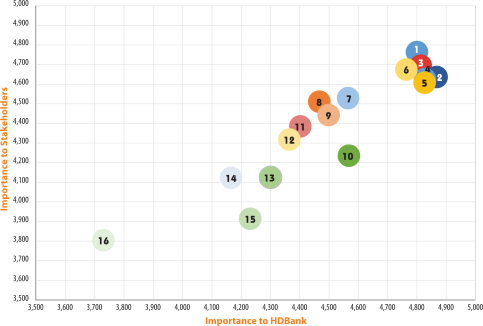
The identification and assessment of material topics extend beyond mere compliance with international standards and best practices, but also enable us to allocate resources more effectively, focusing on areas that generate tangible impact and are aligned with HDBank’s sustainable development strategy. HDBank periodically reviews and updates the list of material ESG topics to ensure alignment with the broader national development context, evolving industry trends, and the expectations of our stakeholders.
1 Ethical conduct and effective corporate governance
2 Branding and transparency assurance
3 Customer-centricity
4 Digital transformation and data security
5 Human capital development and comprehensive welfare
6 Inclusive and equitable workplace
7 ESG risk management
8 Sustainable finance practices
9 Strengthening strategic synergies with key partners
10 Sustainable energy and materials management
11 Inclusive growth and economic value creation
12 Local community engagement
13 Sustainable emissions management
14 Sustainable procurement practices
15 Efficient water and waste management
16 Biodiversity conservation
Below is the matrix of 16 material topics assessed by HDBank for 2025, based on two dimensions: “Importance to HDBank” and “Importance to Stakeholders”:
Acting for a Greener Planet
Topic 1. Sustainable energy and materials management
Topic 2. Sustainable emissions management
Topic 3. Efficient water and waste management
Topic 4. Biodiversity conservation
Building a Sustainable and Prosperous Community
Topic 5. Strengthening strategic synergies with key partners
Topic 6. Sustainable finance practices
Topic 7. Human capital development and comprehensive welfare
Topic 8. Inclusive and equitable workplace
Topic 9. Local community engagement
Topic 10. Customer-centricity
Topic 11. Inclusive growth and economic value creation
Modernizing Operations & Responsible Governance
Topic 12. Ethical conduct and effective corporate governance
Topic 13. Branding and transparency assurance
Topic 14. Digital transformation and data security
KEY HIGHLIGHTS IN SUSTAINABLE
DEVELOPMENT PRACTICES
Overall assessment of sustainable development practices by the Board of Management
Environmental assessment
We, the Board of Management, evaluate HDBank’s environmental management as highly effective, progressively aligning with global standards and reflecting the commitments of the “Acting for a Greener Planet” strategy.
Energy and emissions have been well-managed, with HDBank taking the lead in conducting Scope 3 emissions inventories in accordance with the GHG Protocol, thereby improving carbon governance. HDBank has maintained efficient water resource management, promoted paperless operations, reduced plastic, and achieved positive outcomes in green finance through green credit growth and green bond issuance.
Employee-related assessments
We affirm that HDBank has fostered a people-centric workplace that ensures equality, transparency, and sustainable human resource development.
A high female representation (57%) has been maintained within HDBank’s employees, with women accounting for over 43% of management positions. Entry-level salaries are applied uniformly bank-wide, regardless of gender or geographical region, and consistently exceed the regional minimum wage.
Furthermore, 100% of employees receive health check-ups and comprehensive insurance coverage. In 2025, an amount of VND 57.9 billion was allocated to expand employee benefits. Notably, the average monthly income stood at VND 34.8 million. The 13th-month salary and performance-based bonuses have been maintained for over 98% of staff.
A total of 1,003 training programs focusing on digital skills, AI, risk management, and ESG have been delivered, with 139,608 attendances (achieving 168% of the target).
Implemented
0training programs
With
0attendances
Social responsibility assessments
We highly appreciate the effectiveness and broad impact of HDBank’s social responsibility programs in 2025, which received significant investments and had clear directions, thus making meaningful contributions to community development.
Total spending on social welfare activities in 2025 amounted to VND 139 billion, focusing on key programs, including housing and infrastructure (construction of nearly 2,600 homes and sponsorship of rural bridges), education and healthcare (support for disadvantaged children, scholarships, clean water systems, and free eye surgeries), disaster relief (VND 10 billion for storm- and flood-hit areas and infrastructure recovery). Local economic development initiatives were maintained through the OCOP program and agricultural product distribution support.
Total spending on social welfare activities in 2025 amounted to
0VND billion
Sustainable finance practices
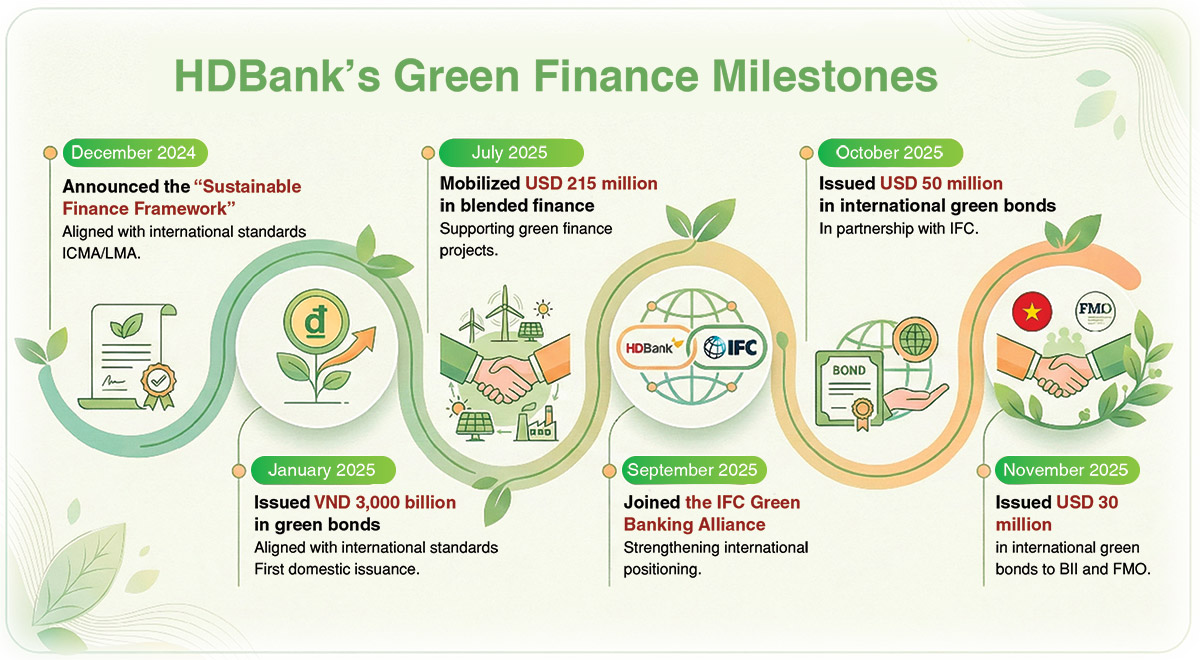
As one of the banks pioneering sustainable finance in Vietnam, HDBank has maintained a strategy of expanding green credit in alignment with the transition toward a low-carbon economy. From 2019 to December 31, 2025, more than VND 42 trillion has been disbursed to green sectors, demonstrating HDBank’s strong commitment to achieving our Green Credit Development Scheme and sustainable growth objectives.
In 2025, the green credit program was further accelerated by introducing incentive policies, strengthening appraisal criteria aligned with the Sustainable Finance Framework, and diversifying the green finance portfolio. As a result, HDBank successfully disbursed VND 10,835 billion, representing growth at 28%, with outstanding green credit allocated to key sectors such as wind power, rooftop solar power and solar farms, green buildings, electric vehicle loans, and low-emission agriculture and rice production models.
Reducing greenhouse gas (GHG) emissions is an inevitable global trend and a key priority in HDBank’s sustainable development strategy. Since 2023, we have conducted annual GHG inventories in line with the GHG Protocol’s guidelines, providing a basis for evaluating emission reduction measures and adjusting our roadmap toward Net-Zero emissions.
In 2025, HDBank continued to effectively implement the iPaper application for processing and approving internal applications. A total of 80,772 applications were processed and approved through this system, with 1,010,987 pages viewed and approved online. This digitalization initiative enabled us to save approximately 3.16 tonnes of printing paper (based on an average of ~6.25 grams per double-sided A4 sheet), contributing to lower operating costs and supporting sustainable development goals.
Water is an essential resource that must be used efficiently and responsibly. Although banking operations do not pose significant pressure on water resources, and most of the water that we consume is for routine activities at our Head Offices and transaction points, we still continue to implement measures to promote bank-wide water conservation.
Our Head Office has installed a legally compliant wastewater treatment system with a capacity of 35m3per day. This system is engineered based on actual usage and discharge requirements, which are estimated at an average of 34,4m3per day. Wastewater from sanitary facilities is directed to holding tanks and treated on-site before being discharged into the municipal sewerage system. After being collected in a holding tank, most of the sludge is recirculated to the aerotank, while the remainder is pumped to a sludge thickener to reduce volume. The thickened sludge is then periodically dewatered every 6-12 months and collected by specialized vehicles.
Waste
Our operations primarily generate domestic waste and virtually no hazardous waste. Although waste management is not a key area of our sustainable development strategy, we maintain strict legal compliance and impose measures to minimize waste generation and environmental impact. In 2025, a pilot program to measure domestic waste at the GIH was initiated, recording total waste generation of 150.37 tonnes.
HDBank stands as the only bank in the market to be honored as the “Best Companies to Work for in Asia” for 8 consecutive years by HR Asia, a leading human resource magazine in Asia.
In 2025, HDBank solidified our strong commitment to the community through a series of nationwide social welfare programs, focusing on support for the poor, child development, improvements in education and healthcare, disaster relief, and infrastructure construction in disadvantaged areas. These initiatives not only reflect our sustainable development philosophy but also provide opportunities for each employee to promote the spirit of sharing and support the community.
HDBank’s sustainable development governance structure
Department
Roles and responsibilities
Board of Directors
Board of Directors
Provides strategic direction and guidance on HDBank’s sustainability issues.
Approves sustainability objectives, action programs, and implementation roadmaps.
Strategy Committee
Establishes the general bank-wide direction on sustainability priorities, ensuring responsible and transparent business practices.
Develops and approves policies, documents, and statements articulating our vision and direction for sustainability in the medium and long-term.
Tracks and evaluates the progress of programs and initiatives to meet established targets.
Board of Management
Chief Executive Officer and Board of Management
Leads the development of, and submits to the Board of Directors for approval, objectives, and action plans under HDBank’s Sustainable Development Strategy Framework.
Organizes system-wide implementation while overseeing and ensuring that the execution meets the established targets.
Environmental and Social Council
Monitors the execution of E&S action plans agreed upon with our lenders.
Enhances the consistency and efficiency in environmental risk management practices across HDBank’s investment portfolios in line with internal policies.
Develops, promotes, and monitors Key Performance Indicators (KPIs) related to environmental and social performance.
Supervises HDBank’s commitments to ensuring sustainability, adhering to environmental and social standards (including climate change), and ensuring responsible business practices.
Reviews, evaluates, and updates emerging E&S issues to assess their materiality to HDBank’s long-term value creation and to our products and services, thereby advising the CEO on HDBank’s environmental and social development direction.
ESG Department
Manages the implementation of sustainability programs and initiatives in alignment with our strategic goals.
Monitors and promptly applies measures to improve ESG performance.
Compiles data and prepares the bank-wide Sustainability Report for approval.
Designs and implements sustainability training sessions in line with domestic and international trends.
Environmental & Social Risk Management Department
Executes sustainability programs and action plans as directed by the Board of Directors and Board of Management.
Implements activities to promote green credit, develop green banking, and enhance environmental risk management in credit granting in alignment with internal and legal regulations.
Conducts training programs to raise employee awareness regarding sustainable development, green growth, green credit, and green banking.
Ensures a consistent and effective management mechanism for implementing sustainability programs and initiatives, aligned with approved strategic objectives.
Monitors and takes timely actions to improve the efficiency of ESG programs and initiatives.
Reviews and manages E&S risks in credit granting for wholesale clients.
Divisions and Functional Departments
Implement approved sustainability initiatives assigned to each specialized department.
Consolidate and report on the implementation results of sustainability initiatives and action programs for management review and approval.
Employees
Undertake daily tasks related to sustainability.
Promptly report any impacts on stakeholders arising from our operations.
Legal compliance
Commitment to legal compliance and environmentally friendly credit operations
HDBank is steadfast in our commitment to complying with Vietnam’s laws and regulatory guidelines regarding environmental protection and sustainable development. We maintain rigorous standards in risk management, specifically concerning E&S risks in our lending activities. In 2025, HDBank recorded no instances of non-compliance with environmental laws and regulations, underscoring our firm commitment to sustainable development and responsible finance.
Coordination with regulatory authorities in building environmental and social databases
In alignment with the direction of the State Bank of Vietnam, HDBank actively collaborates with functional agencies to develop a comprehensive database on corporate environmental compliance and violations. This system is expected to serve as a vital information resource, enabling commercial banks to enhance their credit appraisal processes, better identify environmental risks associated with borrowers, and restrict lending to activities with potential adverse environmental impacts.
During the implementation phase, HDBank has worked with regulatory bodies to build a unified environmental and social data platform, facilitating more efficient and transparent access to information for banking institutions. Through 2025, we continued to submit periodic reports to the State Bank of Vietnam regarding the progress of integrating E&S risk assessments into our corporate loan portfolio.
In 2026, HDBank plans to further expand the scope of our E&S impact measurement across our corporate credit portfolio. Key focus areas will include measuring greenhouse gas emissions, estimating GDP contributions, and evaluating job creation. These initiatives will be implemented in collaboration with international development finance institutions, aiming to elevate impact management standards and drive sustainable growth in our banking operations.
Shareholders and investors
HDBank’s commitments
to stakeholders
Engagement channels
Frequency of engagement
Key engagement topics
HDBank’s actions and outcomes
HDBank is committed to maintaining transparent and timely disclosure to our shareholders and investors, while proactively incorporating their feedback to enhance the quality of our shareholder and investor relations practices. We continuously improve our communication mechanisms to strengthen trust and foster long-term partnerships with stakeholders.
General Meeting of Shareholders and consultation.
Annually
Ensuring business efficiency and delivering sustainable value to shareholders, investors, and stakeholders.
Maintaining transparent, complete, and timely disclosures in compliance with applicable regulations.
Fulfilling responsibilities to shareholders, investors, and stakeholders through effective governance and continuous dialogue.
Maintaining transparency through full and timely financial disclosures and reporting.
Strengthening corporate governance and enhancing the effectiveness of internal controls.
Actively listening to feedback and improving communication processes with shareholders and investors.
Making strategic decisions based on the long-term interests of shareholders and stakeholders.
Delivering sustainable business performance, with ROE maintained above 25%, a 25% dividend payout from 2024 retained earnings, and a 4.69% bonus share issuance from the 2025 charter capital reserve fund.
Conducting investor meetings and engagement activities to reinforce trust and long-term partnerships.
Investors Conference.
On an ad hoc basis upon significant events and/or quarterly
Periodic investor newsletters.
On an ad hoc basis upon significant events and/or monthly
Telephone and email.
Regular
HDBank’s official website.
Regular
Investor Relations Department.
Regular
Customers
HDBank’s commitments
to stakeholders
Engagement channels
Frequency of engagement
Key engagement topics
HDBank’s actions and outcomes
We proactively engage with our customers by actively listening to and understanding their needs in order to deliver timely and appropriate financial products and services. We are committed to continuously enhancing service quality through feedback collection and ongoing improvements.
HDBank’s official website and social media platforms.
Regular
Growing demand for technology-enabled financial products and services to deliver greater convenience and optimized customer experience.
Expectations for modern digital platforms that ensure security, speed, and operational stability throughout the experience.
Customer satisfaction as a reflection of the quality of financial services provided by HDBank.
Strong emphasis on the protection of personal data and transaction information.
Expectations for transparent advisory processes and clear, comprehensive, and easy-to-understand financial product information.
Enhancing customer experience through the adoption of advanced technological solutions, ensuring fast, convenient, and secure transactions.
Providing flexible financial product packages to facilitate timely access to capital, while accompanying customers, particularly during periods of financial difficulty.
Conducting periodic surveys to capture customer feedback on service quality.
Ensuring the safety and confidentiality of customer data throughout all transactions and service usage.
Implementing regular, both scheduled and ad hoc, training, inspections, and monitoring of advisory activities to ensure transparency and integrity in customer interactions.
In-person interactions: at branches, transaction offices, as well as through relationship managers and customer service center staff.
Regular
Nationwide local workshops.
Regular
Feedback boxes at transaction points.
Regular
Người lao động
HDBank’s commitments
to stakeholders
Engagement channels
Frequency of engagement
Key engagement topics
HDBank’s actions and outcomes
We have established a two-way communication system with our employees to ensure consistent dissemination of HDBank’s development directions, while enabling all employee feedback and concerns to be received and addressed promptly across the organization.
Regular meetings and internal workshops.
Monthly
Work environment, and compensation and benefits policies.
Career development pathways and employee motivation mechanisms.
Training and professional skills development programs.
Occupational safety and health.
Promotion of equality, non-discrimination, and respect for human rights.
Data privacy and personal information protection.
Conducting training and communication on Anti-discrimination regulations and grievance processes.
Guaranteeing compensation, benefits, and social security policies for employees.
Adopting technology in the management and assessment of employee competencies.
Organizing training courses and competitions to promote employees’ engagement and upskilling.
Conducting surveys to gather employee feedback on their jobs, training, benefits, and work environment.
Developing a variety of recruiting initiatives to attract talents.
Implementing talent retention initiatives (e.g., ESOP, senior and mid-level management, and potential leadership training, etc.).
Encouraging employee participation in key organizational decision-making processes.
Employee satisfaction and feedback survey.
Annually
Informal gatherings to encourage idea sharing.
As needed
Internal communication channels such as emails, newsletters, internal social platforms.
Regular
Regulatory authorities
HDBank’s commitments
to stakeholders
Engagement channels
Frequency of engagement
Key engagement topics
HDBank’s actions and outcomes
HDBank strictly complies with all applicable laws and regulations and maintains close coordination with regulatory authorities through proactive communication, timely updates, and full implementation of relevant policies and regulations.
Conferences and workshops organized by Ministries and sectoral departments.
As required or on an ad hoc basis
Compliance with laws and regulations.
Strengthening risk management, contributing to economic stability, inflation control, and sustainable development.
Environmental and social impact management.
Ongoing communication during the implementation of policies and regulations.
Enhanced communication.
Fully complying with all regulatory requirements across our operations.
Pioneering the implementation of the government and SBV’s policies on green credit, high-tech agricultural credit, rural development, renewable energy, and funding for SMEs and households, etc.
Being selected in the mandatory transfer of an under-performing credit institution.
Being recognized for the fifth consecutive year by the People’s Committee of Ho Chi Minh City as an enterprise with outstanding compliance with tax regulations and state budget obligations.
Bilateral and multilateral meetings with regulatory authorities.
As needed
Reports seeking input and recommendations on implementation.
Monthly/Quarterly/Annually
Media and
press
HDBank’s commitments
to stakeholders
Engagement channels
Frequency of engagement
Key engagement topics
HDBank’s actions and outcomes
We enhance multi-channel communication initiatives to strengthen brand visibility and proactively receive and respond to information related to HDBank in a timely manner.
Press conferences and interviews.
Regular
Our periodic business performance and short- and long-term development strategies.
Key information and significant events related to HDBank.
Closely coordinating to provide transparent and timely information to the public in both Vietnamese and English, in line with international standards on corporate governance and investor relations.
Maintaining regular and periodic communication regarding our programs and notable events.
Responding promptly to all information concerning HDBank.
Forums and seminars organized by media agencies.
As needed
Press release.
As needed
HDBank’s official website and social media platforms.
Regular
Telephone and email.
Regular
Suppliers
and business
partners
HDBank’s commitments
to stakeholders
Engagement channels
Frequency of engagement
Key engagement topics
HDBank’s actions and outcomes
HDBank prioritizes the selection of suppliers and partners who demonstrate a strong commitment to sustainability standards in procurement practices.
Direct meetings.
Regular
Product and service quality.
Fulfilling contractual obligations, including risk management, environmental and social (E&S) responsibilities, and community commitments.
Ensuring occupational health and safety and appropriate working conditions.
Fully honoring and complying with all agreed responsibilities and commitments.
Enhancing suppliers’ and partners’ awareness of corporate governance practices and environmental impact management.
Prioritizing suppliers and partners who have sustainable social and environmental policies.
Telephone and email.
Regular
Supplier evaluation, classification, and selection at the beginning of each cycle.
Monthly/Quarterly/Annually
Local communities
HDBank’s commitments
to stakeholders
Engagement channels
Frequency of engagement
Key engagement topics
HDBank’s actions and outcomes
HDBank is committed to fostering local community development through the provision of diverse financial services and support for social protection initiatives.
Direct meetings.
Regular
Promoting inclusive finance for all customer segments, from individuals to businesses.
Creating and expanding employment opportunities for the local workforce.
Implementing community support programs and promoting local economic development.
Actively contributing to sustainable local economic development and job creation.
Maintaining and expanding community support initiatives, with a focus on education, healthcare, and social housing.
Organizing and sponsoring annual community and social programs to enhance education, public health, and cultural well-being.
Engagement and coordination with local authorities.
Regular
Media and press channels.
Regular
Telephone and email.
Regular
HDBank’s official website and
social media platforms.
Regular
Sustainable finance practices
As one of the banks pioneering sustainable finance in Vietnam, HDBank has maintained a strategy of expanding green credit in alignment with the transition toward a low-carbon economy. From 2019 to December 31, 2025, more than VND 42 trillion has been disbursed to green sectors, demonstrating HDBank’s strong commitment to achieving our Green Credit Development Scheme and sustainable growth objectives.
In 2025, the green credit program was further accelerated by introducing incentive policies, strengthening appraisal criteria aligned with the Sustainable Finance Framework, and diversifying the green finance portfolio. As a result, HDBank successfully disbursed VND 10,835 billion, representing growth at 28%, with outstanding green credit allocated to key sectors such as wind power, rooftop solar power and solar farms, green buildings, electric vehicle loans, and low-emission agriculture and rice production models.
Energy management
Year
Electricity (kWh)
Gasoline for transport (liter)
Diesel oil (liter)
Grid power
Solar power
Wind power
Transports (liter)
Generators
2023
534,240
36,348
-
201,936
131,514
-
2024
536,681
22,983
-
189,351
143,153
-
2025*
4,236,281
63,219
1,686
192,820
197,353
2,250
(*) In 2025, HDBank reviewed and adjusted the scope of calculation as well as data collection methodologies for certain energy indicators to ensure accuracy, consistency, and reflection of our actual energy consumption.
Electricity
Grid power: In 2025, the measurement scope for grid power consumption included the Head Office building at 25 Bis Nguyen Thi Minh Khai, Ho Chi Minh City, and the Galaxy Innovation Hub - GIH (In 2023 and 2024, it only covered the Head Office building).
Solar power: In 2023 and 2024, solar energy production and consumption were measured. However, in 2025, HDBank temporarily excluded solar power data from the Head Office at 25 Bis Nguyen Thi Minh Khai due to inconsistencies in measurement methodologies that could lead to inaccuracies in total electricity consumption. 2025 solar power data was therefore collected from GIH only.
Wind power: Currently, HDBank only measures wind energy production and consumption at GIH.
GASOLINE AND DIESEL OIL (DO)
From 2023 to 2024, gasoline and diesel data were measured based on consumption by the vehicle fleet at the Ho Chi Minh City Head Office. In 2025, HDBank significantly expanded the data collection scope, to include the entire vehicle fleet under the Head Office management in:
Hanoi
Ho Chi Minh City
Long Khanh
Dong Nai
Trang Bom
The vehicle fleet acquired from DongA Commercial Joint Stock Bank (now Vikki Bank)
This expanded scope provides a more comprehensive reflection of bank-wide fuel consumption and explains the increase in 2025 gasoline and diesel indicators compared to previous years. The increase does not stem from higher fuel demand, but primarily from the broader and more complete measurement scope, making the 2025 data more transparent and comprehensive compared to 2023 and 2024.
Measures and initiatives for efficient energy consumption management
Expanding clean energy and optimizing electricity consumption in operations
HDBank sources electricity from EVN’s grid while integrating rooftop solar systems at selected buildings to meet daily operational needs. This gradually increases the share of renewable energy and reduces reliance on grid power. A range of energy-saving measures has also been implemented, including optimizing equipment operating schedules, digitizing manual processes, leveraging natural lighting, and installing smart lighting systems with sensors that automatically switch off when the areas are sufficiently lit or unoccupied. These solutions have significantly reduced power consumption while maintaining an efficient workplace.
Enhancing the efficiency of power-intensive systems
HDBank adopts energy-saving measures for the air conditioning systems, the biggest power consumer, by using inverter technology, maintaining temperatures at 26-28°C, and implementing zoned cooling to align capacity with actual demand. The central air conditioning system is programmed to automatically shut down after 6:00 PM and operate outside working hours only upon approval. Natural ventilation is prioritized over artificial cooling in corridors and well-ventilated areas to reduce electricity consumption and indirect emissions.
Optimizing energy in technology infrastructure and backup devices
HDBank has improved energy efficiency at our Data Centers by replacing legacy servers with high-performing equipment, adopting virtualization to reduce the number of physical servers, and optimizing resources to avoid low-load operation. In addition, diesel oil for backup generators at the Head Offices and branches is managed through periodic maintenance schedules to ensure stable operation, reduced fuel consumption, and continuity during grid power disruptions.
Reducing fuel consumption through fleet optimization and green mobility
To reduce fossil fuels, HDBank closely manages our internal vehicle fleet through vehicle use approval and periodic monitoring of fuel consumption for each vehicle. We use route management software and GPS to optimize travel routes, thus minimizing unnecessary mileage and congestion while saving fuel. We are also expanding the use of green transportation through our partnership with Xanh SM, introducing electric vehicles into daily transportation to reduce carbon emissions and consumption of conventional fuels.
Greenhouse gas emissions management
Reducing greenhouse gas (GHG) emissions is an inevitable global trend and a key priority in HDBank’s sustainable development strategy. Since 2023, we have conducted annual GHG inventories in line with the GHG Protocol’s guidelines, providing a basis for evaluating emission reduction measures and adjusting our roadmap toward Net-Zero emissions.
We continued to conduct Scope 1 and Scope 2 emissions inventories in 2025, focusing on key operational emission sources:
Scope 1 - Direct emissions from fuel consumption by the corporate vehicle fleet and generators at the Head Office (25 Bis Nguyen Thi Minh Khai, Sai Gon Ward, Ho Chi Minh City) and the GIH.
Scope 2 - Indirect emissions from electricity sourced from Vietnam Electricity (EVN).
Scope 3 - Emissions from employee business travel (tracked via air miles).
CO₂e emissions are calculated in accordance with the fuel emission factors in the Ministry of Natural Resources and Environment’s Decision No. 2626/QD-BTNMT dated October 10, 2022, together with IPCC guidelines, the national grid emission factor in the Department of Climate Change’s Official Letter No. 327/BDKH-PTCBT dated March 19, 2024, and the GHG Protocol’s GHG emissions measurement standards.
Although 2025 total emissions increased compared to 2024, this does not reflect higher energy consumption. It is primarily due to HDBank’s expansion and adjustment of the fuel data collection scope to cover the entire corporate vehicle fleet. Changes in scope and calculation methodologies are detailed in the section on “Energy consumption management” herein.
Indicator
2025
2024
Total direct GHG emissions - Scope 1 (tonne)
1,009.2
846.9
Total indirect GHG emissions - Scope 2 (tonne)
2,866.3
363.1
Total indirect GHG emissions - Scope 3 (tonne) - Business air travel (tonne)
241.8
291.5
Total direct & indirect GHG emissions (tonne)
4,117.3
1,501.5
For Scopes 1 and 2 emissions, HDBank has continued to implement measures to reduce GHG emissions in our operations, including optimizing buildings’ electricity efficiency, evaluating the effectiveness of solar power use at 22 installed locations to identify better solutions, and promoting the transition to low-emission transportation (i.e., the use of electric taxis and adoption of Euro 5 emission standards for the corporate vehicle fleet).
For Scope 3 emissions, we have adopted a number of measures to reduce GHG emissions from business air travel, including:
Increasing virtual meetings to replace in-person meetings that require travel.
Encouraging optimized business travel scheduling to reduce the number of flights.
Exploring emission offsetting and reduction solutions that align with our roadmap toward Net-Zero emissions.
Sustainable materials management
Indicator
2025
2024
Change (%)
Total materials consumed (tonne)
215.158
233.701
Decreased 8%
Paper (tonne)
170
173.5
Decreased 2%
Ink (tonne)
0.158
0.201
Decreased 22%
Plastic (tonne)
45
60
Decreased 25%
In 2025, HDBank continued to effectively implement the iPaper application for processing and approving internal applications. A total of 80,772 applications were processed and approved through this system, with 1,010,987 pages viewed and approved online. This digitalization initiative enabled us to save approximately 3.16 tonnes of printing paper (based on an average of ~6.25 grams per double-sided A4 sheet), contributing to lower operating costs and supporting sustainable development goals.
As part of our commitment to achieving Net-Zero emissions before 2050, we also continued to reduce plastic in our operations. Except for cash bags, which have been fully replaced with biodegradable alternatives, we have minimized single-use plastics in our office. Employees are provided with personal ceramic cups; meeting rooms consistently use glass cups and bottles; and plastic cups have been replaced with biodegradable paper cups at our transaction counters. Gift calendar packaging for our customers and partners has also been replaced with paper materials. We also encourage our customers to conduct online transactions to reduce in-person ones, thereby improving accessibility and reducing material consumption. HDBank also fosters a sustainable lifestyle within our team by discouraging the use of plastic bags and single-use plastics to prioritize recycled products in both work and daily life. As a result, HDBank’s 2025 plastic consumption decreased by 25% compared to 2024, equivalent to 15 tonnes of plastic.
Water resource management
Water is an essential resource that must be used efficiently and responsibly. Although banking operations do not pose significant pressure on water resources, and most of the water that we consume is for routine activities at our Head Offices and transaction points, we still continue to implement measures to promote bank-wide water conservation.
All water is supplied by local municipal water providers, ensuring quality in compliance with applicable laws. Water consumption is centrally managed based on data recorded in the monthly utility bills of each unit.
In 2025, we continued to monitor and consolidate bank-wide water consumption data as a basis for assessing consumption patterns, promoting waste reduction initiatives, and raising awareness of sustainable water use among our employees. During the year, HDBank also expanded the scope of water consumption measurement to include both the Head Office building at 25 Bis Nguyen Thi Minh Khai, Sai Gon Ward, Ho Chi Minh City, and the Galaxy Innovation Hub - GIH (In 2024,
it only covered the Head Office building).
Indicator
2025
2024
Total water consumption (sourced from municipal/public/private water providers) - m3
37,250
26,961
HDBank proactively implements water efficiency measures across our office buildings to make meaningful contributions to our “For a Green Planet” goal. As a financial services provider, our water consumption mainly comes from the basic daily activities of our employees, including the use of drinking water and clean water supplied through municipal water systems. Although our water consumption is relatively low compared to that of the manufacturing sectors, we still consider water conservation and responsible use an integral part of our sustainable resource management strategy.
Wastewater and waste management
Wastewater
Our Head Office has installed a legally compliant wastewater treatment system with a capacity of 35m3per day. This system is engineered based on actual usage and discharge requirements, which are estimated at an average of 34.4m3per day. Wastewater from sanitary facilities is directed to holding tanks and treated on-site before being discharged into the municipal sewerage system. After being collected in a holding tank, most of the sludge is recirculated to the aerotank, while the remainder is pumped to a sludge thickener to reduce volume. The thickened sludge is then periodically dewatered every 6-12 months and collected by specialized vehicles.
Wastewater quality is regularly monitored through inspections, sampling, and analysis in accordance with applicable technical standards, ensuring that treated water meets QCVN 14:2008/BTNMT standards for domestic wastewater. The results enable us to promptly identify areas for improvement and maintain stable, compliant system operations.
For transaction points and offices with wastewater volumes below 5m³ per day, domestic wastewater is discharged directly into the municipal sewerage system in accordance with the laws, without requiring a separate treatment system.
Waste
Our operations primarily generate domestic waste and virtually no hazardous waste. Although waste management is not a key area of our sustainable development strategy, we maintain strict legal compliance and impose measures to minimize waste generation and environmental impact. In 2025, a pilot program to measure domestic waste at the GIH was initiated, recording total waste generation of 150.37 tonnes.
We have also issued guidelines on waste segregation at source for all employees and entered into agreements with waste collection and treatment vendors in compliance with the laws. For hazardous waste (if any), we require our vendors to provide full handover and treatment documentation, including details on quantity, condition, and disposal methods. Hazardous waste is collected annually and directly at our offices and transaction points to ensure control, transparency, and compliance.
For domestic solid waste, HDBank engages a specialized waste collection vendor for daily collection. Our vendors are required to deliver qualified personnel, use appropriate equipment, ensure safe collection, and clean up any waste generated during transportation. All waste collection and treatment activities must comply with environmental sanitation and occupational safety regulations.
Through these measures, HDBank maintains a responsible waste management system, ensuring that our operations do not adversely affect the environment and the community.
Assessment of environmental risks/impacts from core banking activities
HDBank identifies environmental risks primarily from credit for potentially high-emission sectors. We consider them as material risks requiring close monitoring. We have integrated ESG criteria into our risk management framework and credit policies, while prioritizing financing for green projects and environmentally friendly sectors, in line with our commitment to achieving Net-Zero emissions.
In addition, environmental impacts from operational activities are mitigated by accelerating digital transformation, with digital transactions accounting for a dominant share to reduce paper and energy consumption in daily operations. The integration of environmental considerations across governance and operational processes reflects our commitment to managing environmental risks and promoting sustainable growth.
Advancing people and community development
HDBank stands as the only bank in the market to be honored as the “Best Companies to Work for in Asia” for 8 consecutive years by HR Asia, a leading human resource magazine in Asia.
In 2025, we strengthened strategic partnerships with major universities nationwide and provided internship, scholarship, and advanced training programs to attract and develop final-year students and young talents. These efforts aim to build a high-quality succession team and contribute meaningfully to finance and banking workforce development. Young leadership development programs were regularly conducted, enabling high-potential employees to take on key roles early on. This is also reflected in the newly recruited workforce, with 34% under the age of 30, demonstrating HDBank’s goals of prioritizing young talents and sustainable human resource development.
2025 workforce highlights
Indicator
December 31, 2025
December 31, 2024
Total employees
18,273
18,533
Total male employees
6,781
7,107
Total female employees
11,492
11,426
Transparent, diverse, and inclusive recruitment
HDBank’s entire recruitment process is conducted based on the principles of transparency, fairness, and non-discrimination, ensuring all candidates have equal access and opportunities to compete based on merit. Information on job vacancies, requirements, evaluation criteria, and benefits is publicly disclosed on HDBank’s official channels and reputable recruitment platforms, enabling candidates to access comprehensive and transparent information. In 2025, HDBank recruited 4,207 employees across various age groups and levels, with an accession rate of 0.23.
Human resource development policy - capacity-building and future career growth
Guided by the philosophy of “continuous learning - holistic development - sustainable engagement,” HDBank has developed a flexible training model tailored to each role and grounded in baseline competency assessments, individual career paths, and each unit’s strategic requirements. We also keep a close eye on sector-specific competency trends to promptly update training content, ensuring our workforce maintains a competitive edge and is well-prepared for more senior roles in the future.
In 2025, a total of 1,003 training programs and courses were organized, equivalent to 803,474 training hours per year and an average of 77.1 training hours per employee per year (including 68 hours per management-level staff and 53 hours per employee). These programs attracted 139,608 attendances (achieving 168% of the target) and covered all professional areas, soft skills, mid-level leadership, HIPO programs, as well as technology, digital business, AI, risk management, and sustainable finance. This large-scale investment not only meets operational requirements but also fosters a high-quality succession team with modern governance thinking and readiness to adapt to advanced banking models.
In 2025, a total of
training programs and courses
Equivalent to
training hours per year
Attracted
attendances
Closely aligned with the training framework is a transparent, outcome-driven performance management system. This serves as a strategic nexus aligning individual competencies, goals, and career advancement opportunities. Performance evaluations are conducted monthly using role-specific KPIs and are fully digitized on an online management platform. This enables all steps, from goal setting and progress tracking to performance recording, to be carried out quickly, accurately, and with minimal subjectivity. In 2025, over 90% of employees across all levels were consistently evaluated, reflecting strong compliance and uniformity within our performance management system. This transparent evaluation acts as a strategic roadmap for employees to clearly understand expectations, receive constructive feedback, and directly align their performances with decisions on training, rewards, capacity-building, and career advancements.
Occupational safety and health (OSH)
In 2025, we continued to prioritize OSH policies through the strict implementation of Business Continuity Planning (BCP), Business Continuity Management (BCM), fire prevention and firefighting systems, and periodic drills in accordance with regulatory requirements. To safeguard employees’ long-term health, we not only fully comply with statutory insurance requirements but also provide additional health and accident insurance programs, along with annual health check-ups. Employees’ health records after each check-up are documented in detail and stored in the Management Information System (MIS), with strict security controls that only allow employees to access through their individual accounts.
In 2025, HDBank’s total budget for employee benefits amounted to VND 284 billion. Our subsidiary, HD SAISON, expanded their accident insurance programs, with annual premiums rising 3.3% from VND 776 million to over VND 800 million. The company also allocated approximately VND 3.7 billion for their employees’ periodic
health check-ups.
In 2025, HDBank’s total budget for employee benefits amounted to
VND billion
Compensation and benefits policies
HDBank places strong emphasis on comprehensive compensation and benefits policies to support employees in maintaining a healthy work-life balance. Salary and allowances for lunch, phone bills, travel, housing, and so on, are designed to align with the specific requirements of each role and geographical location. For six consecutive years, neither HDBank nor HD SAISON has recorded any delays in salary payments, and over 98% of our employees consistently receive a 13th-month salary and annual performance-based bonuses. We aim to continuously increase the average income per employee and have emerged as a market leader in employee income growth compared to our peers. In 2025, the average monthly income amounted to VND 34,818,000 per employee. Benefits policies are flexibly adjusted to recognize employee contributions at different stages while fostering a strong sense of security throughout their careers.
For female employees, we fully and strictly implement maternity and recovery leave policies and special supports, including six months of maternity leave, time off for prenatal check-ups during working hours, and a daily 60-minute break for those with children under 12 months old. Male employees are also entitled to paternity leave.
In addition, HDBank provides pregnant employees with an allowance equivalent to 1.5 months of regional minimum wage, along with a total of five days of leave for prenatal check-ups. In 2025 alone, HDBank recorded 429 female employees taking maternity leave, of whom 96% returned to work, reflecting a strong sense of trust and belonging.
In 2025, the average monthly income amounted to
, VND
Local community engagement
In 2025, HDBank solidified our strong commitment to the community through a series of nationwide social welfare programs, focusing on support for the poor, child development, improvements in education and healthcare, disaster relief, and infrastructure construction in disadvantaged areas. These initiatives not only reflect our sustainable development philosophy but also provide opportunities for each employee to promote the spirit of sharing and support the community.
In partnership with the National Fund for Vietnamese Children, HDBank contributed VND 1 billion in 2025 to deliver tangible results, including cash support for 780 disadvantaged children in provinces such as Lam Dong, Thanh Hoa, An Giang, and Quang Nam; 290 scholarships for underprivileged students in Dong Nai and Tuyen Quang; and a VND 160 million funding for the construction of a safe and healthy outdoor playground for children in economically disadvantaged areas. We also continued our partnership with the Vu A Dinh Scholarship Fund, supporting programs aimed at developing young talent in remote, mountainous, and island regions, thereby facilitating education access and more holistic development for ethnic minority children.
HDBank also implemented several large-scale social welfare programs in 2025. Notably, we contributed VND 10 billion to support communities in northern mountainous and central regions severely affected by storms and floods under a government-led program, demonstrating solidarity during critical times. HDBank also continued participating in the “Eliminating temporary and dilapidated houses nationwide” program, which is a national initiative aimed at improving the living conditions for the poor and policy beneficiaries.
Embracing the theme of “Going Green - Living Digital,” the HDBank Green Marathon is more than just a sporting event - it is a journey where nature meets technology, connecting our community to a sustainable tomorrow.
Nearly a decade of fostering the passion for the National Futsal Championship.
After two years of implementation, the program exceeded its targets, with more than 334,000 houses built or repaired. HDBank and our strategic partners directly contributed nearly 2,600 houses, helping thousands of households secure safe and durable housing. In recognition of these outstanding community development contributions, we were awarded a Certificate of Merit by the Prime Minister in August 2025.
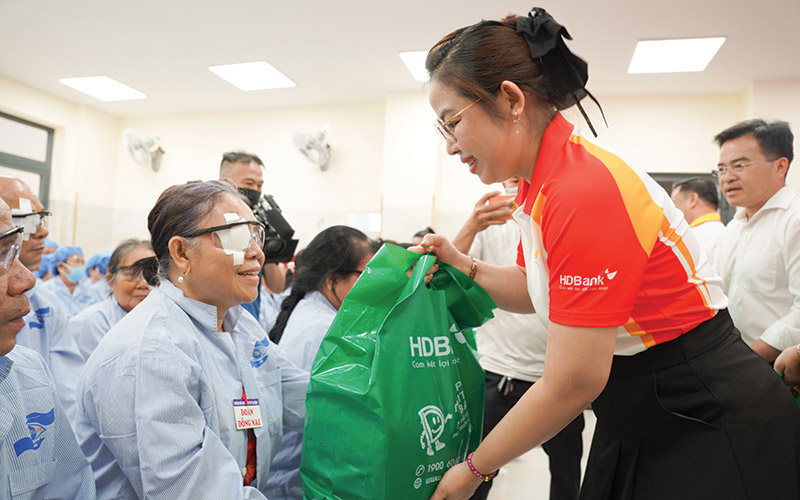
In addition to housing support, HDBank implemented a range of meaningful humanitarian programs across cities and provinces. In An Giang, we provided hundreds of gifts to disadvantaged children. We also sponsored 1,000 free phaco eye surgeries for poor patients, which is a program that we have sustained for 19 years and has thus far restored eyesight for more than 16,000 disadvantaged patients nationwide. In Dong Nai, we funded the construction of outdoor playgrounds for preschool children and awarded scholarships to encourage learning, contributing to improved educational environments for students in border areas.
HDBank partnered with the Ho Chi Minh City Sponsoring Association for Poor Patients to fund eye surgeries for tens of thousands of poor patients nationwide.
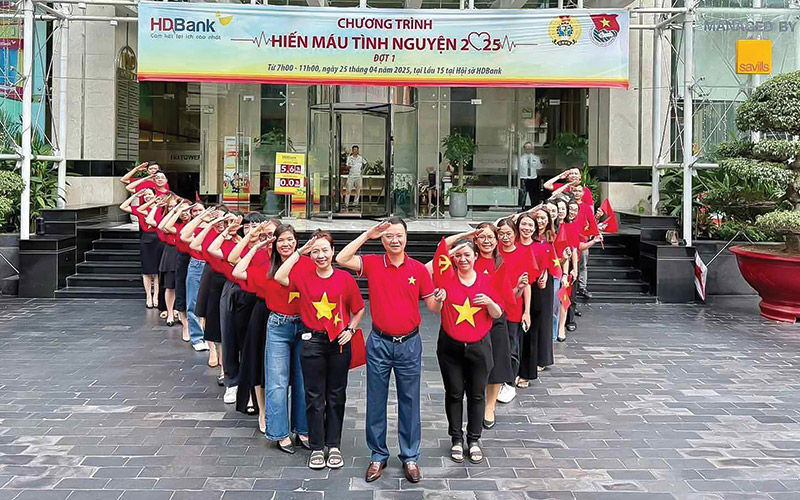
The “2025 Voluntary Blood Donation - Phase 1” at HDBank Head Office attracted active participation from a large number of HCMC-based employees and customers.
AWARDS
DOMESTIC AWARDS
ESG10 - Banking - ESG Green Vietnam 2025 - ESG Green Vietnam 2025
Bank for High-Tech Agriculture Investment
Outstanding Bank for Community Contribution
Vietnam Outstanding Banking Awards (VOBA) by Vietnam Banks Association
ESG Leadership - Top 50 Corporate Sustainability Awards (CSA50) by Nhip Cau Dau Tu Magazine
Companies with Best Corporate Governance - Companies in Financial Sectors
Best Sustainability Report Awards - Companies in Financial Sectors
Vietnam Listed Company Awards
Top Sustainable Companies in Vietnam - CSI100 2025 (by VCCI)
INTERNATIONAL AWARDS
Most Caring Company Awards - HR Asia
Top 5 Publicly Listed Companies from Vietnam 2025 - ASEAN Corporate Governance Scorecard (ACGS)