NGÂN HÀNG THƯƠNG MẠI CỔ PHẦN PHÁT TRIỂN THÀNH PHỐ HỒ CHÍ MINH
Name in English:
HO CHI MINH CITY DEVELOPMENT JOINT STOCK COMMERCIAL BANK
Abbreviated name:
HDBank
Business Registration Certificate:
No. 0300608092 issued by Ho Chi Minh City Department of Planning and Investment,
1st registered on August 11, 1992 and 33rd amended on September 5, 2023
Current charter capital:
VND 50,053 billion
Owner’s equity:
VND 78,286 billion
Head Office:
No. 25Bis Nguyen Thi Minh Khai Street, Sai Gon Ward, Ho Chi Minh City
Phone:
(84-28) 6291 5916
Fax:
(84-28) 6291 5901
Website:
www.hdbank.com.vn
License of Establishment and Operation:
No. 26/GP-NHNN issued by the State Bank of Vietnam dated February 12, 2020,
and Decisions amending and supplementing License of Establishment and Operation No. 26/GP-NHNN dated February 12, 2020
Logo:
Ticker:
HDB
HDBANK’S SUBSIDIARIES/
AFFILIATED COMPANIES
HD SAISON FINANCE CO., LTD. (HD SAISON)
Address:
8th, 9th, 10th Floors, Dali Tower, 24C Phan Dang Luu Street, Gia Dinh Ward, Ho Chi Minh City, Vietnam.
HDBank pioneered the restructuring of the banking system through the mandatory transfer of DongA Bank, which is transformed into Vikki Bank.
HDBank set a new profit record of VND 21,346 billion, with total assets exceeding VND 931,104 billion and positive business performance indicators.
HDBank launched Vikki, a digital finance application that offers smart banking services to enhance user experience and optimize financial transactions.
HDBank was awarded the “Companies with Best Corporate Governance 2024” title by the Vietnam Listed Company Awards (VLCA) Judging Panel.
Navigating the challenges of 2023, HDBank achieved impressive and sustainable profit growth.
HDBank joined the group of banks with profit before tax exceeding VND 10 trillion.
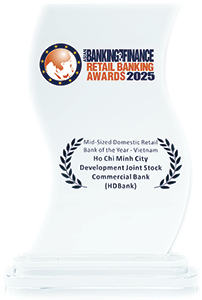
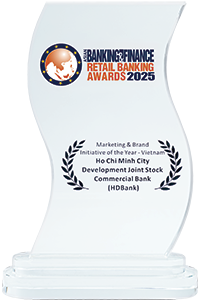
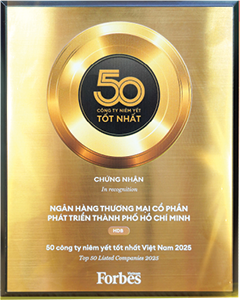
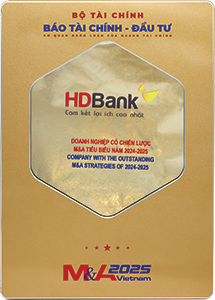
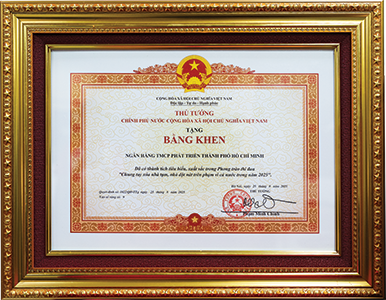
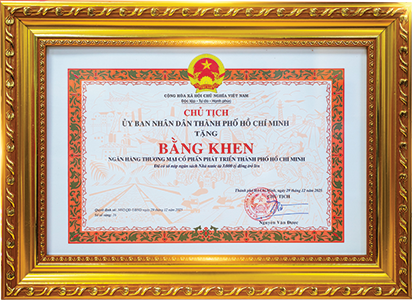
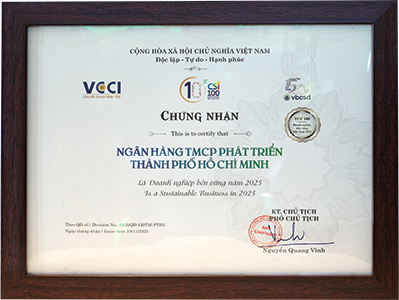
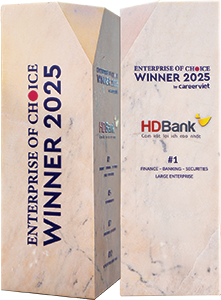
HDBank reinforced the brand reputation and market position with numerous prestigious national and international awards.
The bank successfully issued USD 165 million in international convertible bonds.
Moody’s upgraded HDBank’s credit outlook from Stable to Positive.
The bank marked the 30th anniversary with a number of prestigious awards and titles.
The bank successfully issued USD 160 million in international convertible bonds, becoming the credit institution with the largest volume of bonds issued in 2020.
HDBank’s credit rating was upgraded by Moody’s to B1.
HDB stock was officially traded on the HOSE and placed in TOP 20 stocks with the highest market cap.
HDBank pulled off a successful IPO and was approved to have the bank’s shares (HDB) listed on Ho Chi Minh Stock Exchange (HOSE).
HDBank was assigned B2 rating in the first rating by Moody’s, an international credit rating agency.
HDBank transferred 49% of HDFinance’s capital to Credit Saison (Japan) and renamed the company as HD SAISON.
HDBank acquired Société Générale Viet Finance (SGVF), a wholly owned subsidiary of Société Générale (the French Republic). After the acquisition, SGVF changed their name to HDFinance.
HDBank successfully merged with Dai A Commercial Joint Stock Bank.
We officially changed our name to the current Ho Chi Minh City Development Joint Stock Commercial Bank.
HDBank was established as Ho Chi Minh City Housing Development Commercial Joint Stock Bank.
BUSINESS ENVIRONMENT, OPPORTUNITIES, RISKS, AND CHALLENGES
REVIEW OF THE 2025:
BUSINESS ENVIRONMENT EMBRACING A NEW MINDSET
In 2025, despite unavoidable geopolitical uncertainties, the global macroeconomic landscape turned brighter as inflation was successfully reined in while maintaining steady growth and averting recession. Central Banks continued to uphold accommodative policies to stimulate the economy. In this context, Vietnam emerged as a beacon of stability, proactively preparing for a new journey.
Vietnam’s 2025 economic landscape marked a profound shift from traditional growth drivers toward new ones, notably the digital and green economies. Despite impacts of political tensions, international trade conflicts, natural disasters, and climate change, Vietnam achieved an impressive GDP growth rate of 8.02%. Credit growth rebounded strongly, significantly exceeding the 16% target to reach approximately 20%. These results clearly demonstrate Vietnam’s effective adaptation to emerging technological trends and AI, while affirming its resilient internal strength against international challenges.
Notably, 2025 witnessed the rapid completion of strategic infrastructure, including the North-South Expressway, key energy projects, and the progress of Long Thanh International Airport toward commercial operation. These, alongside the commencement of numerous national-and international-scale projects, have unlocked new development opportunities for both local provinces and businesses.
2025 was also the year Vietnam solidified its international standing by leveraging economic diplomacy to attract capital inflows and meeting the criteria for a stock market upgrade. The banking sector, as the economy’s lifeblood, has pioneered unlocking resources, ensuring capital flows channeled into priority sectors and creating momentum for breakthrough growth in the nation’s era of rise.
VIETNAM AND GLOBAL ECONOMIC OUTLOOK IN 2026:
ENTERING THE ERA OF RISE
2026 marks the beginning of a new chapter in the nation’s economic development as we enter a new era. While the world economy is projected to shift toward tech-based growth, Vietnam is seizing a historic opportunity to escape the middle-income trap, with a strong commitment to achieve double-digit economic growth in line with the objectives set by the Party and the Government.
The 2026 economic outlook is expected to be driven by a spirit of innovation and robust institutional reforms. The Vietnamese Government remains steadfast in its goal of building an independent, self-reliant, and internationally integrated economy. Infrastructure mega projects and the emergence of regional-scale financial centers will serve as the primary growth engines.
For the banking and finance sector, 2026 will be a year of comprehensive digital transformation and the “greening” of capital flows. Banks are expected to maintain their leading role as the primary capital conduit for the recovering economy. Today, banks have evolved beyond traditional credit providers to become creative partners, empowering Vietnamese enterprises to integrate more deeply into global value chains. Macroeconomic stability, combined with the strengths and achievements accumulated over 40 years of innovation, will provide a solid springboard for Vietnam to reach new heights.
OPPORTUNITIES AND CHALLENGES IN 2026
Opportunities: Leveraging national stature. 2026 presents unprecedented opportunities as the Vietnam “national brand” is increasingly strengthened and recognized.
Next-generation capital flows: The bank is well-positioned to capture a new wave of investment in semiconductors, AI, and clean and green energy. These provide significant headroom for high-quality credit growth within the banking sector.
Financial market integration: With the promising outlook of a stock market upgrade, a robust influx of entrusted capital and indirect investment is expected, substantially bolstering the financial capacity of the banking system.
Consumer revolution: The expansion and rise of the middle class in this “new era” will drive a surge in the demand for retail financial products, wealth management and insurance products.
Challenges: While the national aspiration for advancement demands breakthroughs, amid unfavorable global economic and geopolitical volatility, the challenges ahead are significant.
Dual-transformation pressure: Banks are in a race to simultaneously accelerate technological innovation and adhere to stringent ESG standards. Failure to do so risks exclusion from the global arena and losing the pioneer advantage in accessing low-cost capital. Furthermore, technological advancements have given rise to cybersecurity and data protection threats. This requires HDBank to maintain a proactive stance in identifying risks to fortify our defenses against
cyber-attacks.
Escalating geopolitical tensions in the Middle East: The tensions have significantly impacted global trade and supply chains, leading to widespread and unpredictable market volatility. Domestic economic and market risks are centered around these
key areas:
The challenge of managing exchange rate hikes: The worsening macro environment, fueled by severe and unpredictable conflicts in the Middle East, has disrupted oil supplies and spiked oil prices. This has strengthened the USD, leading to a surge in USD demand among importers and exposing import-dependent enterprises to significant exchange
rate risk.
Risks of interest rate and cost of funds: Vietnam has limited room for further monetary easing and needs to enhance exchange rate flexibility to better absorb external shocks. However, spikes in oil and gasoline, fuel, and input costs during the early months of the year have challenged the Government’s inflation control target, directly impacting the SBV’s policy to manage interest rates and exchange rates. The economy must adapt and transform to operate effectively amid uncertainties of the ongoing conflict.
Credit risk: As oil prices spike and remain high in 2026, transportation costs increase, corporate profit margins decrease, and foreign capital outflows from Vietnam, maintaining quality credit facilities has become increasingly challenging.
Risk management in an ever-evolving financial landscape: Despite macroeconomic stability, emerging non-traditional risks (such as cybersecurity and climate change) demand increasingly sophisticated, adaptive, and continuously evolving risk management capabilities aligned with modern trends.
Human resource quality: This new era requires a
banking workforce that is not only professionally competent but also technologically proficient and possesses a global mindset.
The year 2026 marks a period of significant screening and differentiation within the banking sector, reflected in scale, asset quality, credit growth quality, target customer segments, risk management capabilities, transparency,
and the ability to lead digital transformation trends.
Market leadership is no longer uniform; instead, it increasingly depends on the intrinsic value within each individual bank.
HDBANK’S RISK MANAGEMENT
RISK MANAGEMENT SYSTEM
Risk management in 2025
In 2025, HDBank reaffirmed its leadership position with an intelligent risk management system, serving as the core infrastructure for its sustainable development strategy.
With a robust financial capacity, evidenced by a consolidated CAR of 16.72% and a strictly controlled NPL ratio of 1.66%, HDBank has successfully realized its roadmap toward the highest international standards, from Basel III and IFRS 9 to a 5-year ESG strategic framework consulted by leading Big 4 consulting firms.
A breakthrough highlight of the year was the comprehensive digitalization of our credit process by integrating the Credit Rating system into the RLOS and CLOS platforms, optimizing both approval turnaround time and accuracy. Notably, the proactive standardization of Related Party transaction governance (consulted by Big 4 firms) in line with international best practices ensures absolute transparency. This forms a solid foundation for HDBank to provide effective and safe support to its strategic related-party partners. The combination of modern quantitative technology and transparent governance has established HDBank as a trusted financial institution, driving exceptional value for global investors and shareholders.
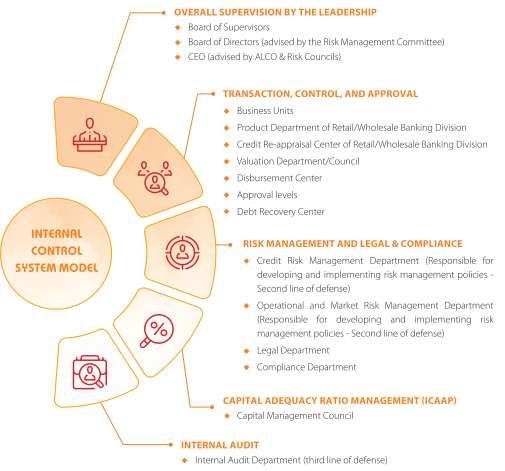
HDBank has implemented an internal control system in accordance with the SBV’s Circular No. 13 and the Basel standards, which includes three (3) lines of defense and five (5) key activities as demonstrated in the following model:
System of regulations, limits, and prudential ratios
The system of regulations, limits, and prudential ratios is continuously refined, ensuring compliance with international standards and the SBV regulations.
The system of institutional documents is structured into three clear levels of authority: Regulations, Provisions, and Guidelines, ensuring that all business processes are standardized and strictly controlled. Notably, the implementation of advanced liquidity ratios, LCR and NSFR, since 2024, alongside Basel III thresholds from 2025, has enabled HDBank to proactively hedge against market volatility and align closely with the latest drafts of the regulatory authorities.
Our limits related to credit transactions, money market transactions, and investments, along with prudential ratios such as liquidity, asset and liability management, etc., are regularly updated in alignment with the SBV regulations and the nature of our operations.
Control, monitoring and inspection system
HDBank places special emphasis on its remote monitoring, control, and inspection system as the basis for detecting, warning, and preventing risks before, during, and after transactions.
The system applies multiple methods simultaneously, including automated checks through the IT system, periodic reviews by specialized control departments, or real-time checks during each transaction processing, in which HDBank has monitored suspect transactions (if any) on-site. HDBank also launched the Internal Control System Restructuring project with the goal of developing a flexible post-control model while providing more monitoring and early warning resources to facilitate effective risk management.
Reports on the results of on-site inspection and monitoring, along with specific data, analysis, warnings, and proposals, are promptly sent to the Board of Management and the Board of Directors for appropriate and timely instructions on response measures.
RISK MANAGEMENT ACTIVITIES
Credit risk management
In 2025, HDBank marked a strategic milestone in credit risk management by integrating international standards and quantitative technology into our operations. We focus on building a credit portfolio that is safe, transparent, and socially responsible.
Refining policy and compliance frameworks: HDBank has finalized its internal regulations to ensure full compliance with the Law on Credit Institutions 2024 and relevant Circulars from the SBV. By integrating risk management requirements directly into the design phase of new products, we have established a robust legal defense mechanism and ensured operational consistency bank-wide.
Pioneering ESG and sustainable finance: Built on a solid foundation developed over many years with support from organizations such as IFC, DEG, and LeapFrog, HDBank continues to lead the market in integrating Environmental and Social (E&S) standards into our appraisal processes. Adhering to these international benchmarks enables us to proactively direct capital toward green projects, translating our commitment to sustainable development into tangible actions.
Going live the next-generation Internal Credit Rating system: The Internal Credit Rating system, featuring advanced quantitative models (details in section 7.2.5), officially went live and was adopted at HDBank. By integrating model outputs into the loan origination process, we have enhanced the objectivity of appraisals, improved the accuracy of assessments of customer financial capacity, and optimized approval efficiency.
Implementing comprehensive digitalization with the ĐiCore Project: HDBank is accelerating the roadmap for our next-generation Core Banking system, ĐiCore. As a centralized operating platform, ĐiCore enables seamless integration of risk data, aiming for full automation of control gates and real-time limit monitoring once the system officially goes live.
Proactively hedging with the Early Warning System (EWS): Post-lending management has been strengthened through a set of early warning indicators. By detecting customers’ potential financial fluctuations early, HDBank can proactively prepare response scenarios, ensuring the NPL ratio remains within a sustainable and safe range.
Market risk management
HDBank’s market risk management framework comprises internal policies, regulations, procedures, and organizational structure. Within this framework, the risk management policy plays a central role, defining the bank’s strategy and risk appetite and providing overall direction for market risk management, such as risk measurement, monitoring, and control; risk limits; and internal reporting. Market risk management is closely coordinated under the oversight of our senior management, based on the input of our Committees/Councils and the Independent Three Lines of Defense Model. Documents and the organizational structure for market risk management are periodically reviewed and assessed to ensure alignment with the laws, as well as our business strategy, plans, and financial capacity.
Using measurement methods/models and tools, we identify potential market risk factors through identification, measurement, monitoring, control, and reporting for each type of transaction. Measurement methods such as valuation (mark-to-market and mark-to-model), profit and loss (P/L) determination, and sensitivity and Value at Risk (VaR) measurements are supported by the Treasury FIS Front Arena system. This system enables end-to-end and timely management of the entire transaction lifecycle, from transaction origination and risk control to transaction processing, while integrating alert functions for limit breaches, if any. In partnership with FIS Global, HDBank also completed the upgrade of the Treasury FIS Front Arena system in 2025 to enhance operational performance.
Market risk stress testing is conducted on a periodical or ad-hoc basis when market risk factors experience significant volatility, which enables us to take timely actions and/or develop response plans for adverse situations.
Liquidity risk and interest rate risk management in the banking book
Amid the volatility of 2025, particularly liquidity and interest rate risks, HDBank consistently emphasized comprehensive risk identification, accurate measurement, and regular monitoring. On this basis, we proactively implemented measures to effectively prevent, mitigate, and control liquidity risk and interest rate risk in the banking book, thereby maintaining safe, stable, and sustainable operations.
With digital transformation in governance as a central goal, we are implementing the Asset-Liability Management (ALM) software and the Fund Transfer Pricing (FTP) system, which are expected to be completed and launched in 2026. These systems will provide a timely data platform and analytical tools to support the Asset-Liability Committee (ALCO) in administrative decision-making, which will enable the bank to manage liquidity risk and interest rate risk based on daily data, enhance balance sheet forecasting capabilities, and improve profit optimization. Once launched, they will enable HDBank to meet and comply with the measurement and calculation requirements set out in the SBV’s new draft circulars.
Stress testing for liquidity risk and interest rate risk in the banking book has been conducted rigorously, regularly, and consistently. The results show that the bank maintains the ability to operate safely and effectively, even under adverse scenarios.
Operational risk management
In 2025, HDBank continued to enhance the effectiveness of our Operational Risk Management Framework launched in 2024, focusing on standardization, proactivity, and alignment with international best practices. Building on this foundation, we focused on refining processes, optimizing tools, and enhancing governance capabilities, thereby strengthening the bank’s capacity for risk prevention, early detection and timely response. This, in turn, ensures safe, seamless and sustainable business operations.
HDBank adopted a comprehensive suite of operational risk management tools in alignment with international best practices, including Risk and Control Self-Assessment (RCSA), Loss Data Collection (LDC), Key Risk Indicator (KRI) monitoring, and Business Continuity Management (BCM) tools. These tools facilitated the early detection of risks, monitoring of loss trends, identification of red flags, and timely implementation of controls, thereby enhancing operational efficiency and service quality.
HDBank maintained rigorous management of outsourcing activities, from vendor due diligence and selection to periodic monitoring, with clear terms regarding responsibilities, service standards, and information security. A primary focus was placed on risk management for IT services to ensure information security and customer data protection in the context of digital transformation. Furthermore, an insurance strategy was implemented as an effective risk transfer tool, in line with HDBank’s risk appetite.
Financial crime risk management
HDBank identifies the management of financial crime risks, including fraud and money laundering, as a key pillar to ensure safe, transparent, and sustainable operations. HDBank fully complies with Vietnamese regulations while progressively aligning with international standards in
anti-money laundering (AML) and counter-terrorism financing (CTF).
Regarding fraud prevention, HDBank is accelerating the development of a centralized management system, leveraging modern technology to enhance the detection and prevention of increasingly sophisticated fraudulent activities. At the same time, we maintain existing control measures, including internal awareness training, enhanced customer communication, and close coordination with authorities and financial institutions.
Regarding AML, HDBank continues to upgrade our specialized technology system, enabling customer screening against watchlists, real-time risk classification, and suspicious transaction monitoring across all channels. The system is designed with a set of control scenarios that are periodically calibrated based on risk levels, enhancing our ability in early detection, warning, and prompt response to risk signals. We also focus on human resource training and strengthening cooperation with regulatory authorities, demonstrating a steadfast commitment to fighting financial crime and safeguarding the system.
In 2026, HDBank aims to further refine our financial crime risk management framework and accelerate the application of advanced technologies such as Artificial Intelligence (AI), Machine Learning (ML), and Big Data Analytics to enhance risk detection and prevention efficiency.
Model risk management
HDBank identifies model risk management as a core competency for implementing Basel and IFRS 9 standards. Over the past year, we have focused our resources on developing, validating, implementing, and applying quantitative risk models, with the partnership of leading consulting firms.
Developing and implementing core risk parameters according to Basel standards: With consultation from Big4 partners, HDBank has finalized the development of Probability of Default (PD), Exposure at Default (EAD), and Loss Given Default (LGD) models. These models (including machine learning models) have been integrated into the Internal Credit Rating system, enhancing the bank’s capacity for proactive credit risk measurement and management.
Calculating ECL under IFRS 9: For international financial reporting, HDBank conducted a validation of our PD, EAD, and LGD models with the support of independent consulting firms. This objective validation serves as a critical foundation for us to develop and refine our Expected Credit Loss (ECL) calculation models in compliance with IFRS 9.
Ensuring transparency and efficiency: By engaging independent consulting firms and ensuring a clear internal functional separation for model development and validation, HDBank has not only enhanced our provisioning calculation tool but also affirmed the objectivity and quality of our current models. It provides a solid foundation for synchronizing risk data, ensuring readiness for full integration once the Đi Core project goes live.
Concentrated risk management
HDBank continued to improve our concentrated risk management in two main operations (in alignment with Circular No. 13/2018/TT-NHNN): Focusing on credit granting and proprietary trading of foreign exchange (FX)/bonds; and developing and implementing a rather rigorous risk limit system, such as the maximum credit limit per customer or group of related customers, sector-specific credit concentration limits, and allocation limits for FX/bond proprietary trading.
Furthermore, we have implemented and upgraded our management and identification system of related customers to ensure effective control in line with increasingly stringent regulatory requirements and international practices.
Legal and compliance
In 2025, HDBank’s legal activities were further strengthened and elevated, playing a foundational role in supporting the bank’s sustainable development amidst a volatile domestic and international socio-economic and legal landscape. Recognizing that those activities are the backbone of ensuring the legal compliance of bank-wide operations, our legal staff remained united and proactive in consistently implementing assigned tasks, thereby achieving all set goals and orientations.
Strengthening legal and compliance risk management:
The Legal Department proactively monitored, updated, and assessed the impact of new regulations to promptly adjust internal documents, operational processes, and offerings. Legal advisory and control activities were consistently implemented bank-wide, helping to mitigate emerging risks and ensure compliance in all business activities.
Protecting HDBank’s legal rights and interests: CDispute resolution and legal representation were conducted in a timely and effective manner, mitigating potential losses and safeguarding HDBank’s interests in legal relations with customers and partners. Furthermore, debt recovery and collateral support were strengthened, contributing to improve asset quality and
credit risk control.
Supporting business operations and digital transformation: The Legal Department still engaged deeply in HDBank’s key projects and strategies, including investments in subsidiaries, affiliated companies, and strategic investors, restructuring projects for other credit institutions, product development, digital transformation, and collaborations with technology partners to ensure that business initiatives were built on a solid legal foundation while meeting compliance requirements in an increasingly complex legal landscape.
Enhancing compliance capability and awareness: HDBank increased internal training and communications to raise compliance awareness and enhance legal risk management capabilities among our employees. These efforts were instrumental in fostering a culture of compliance bank-wide.
Furthermore, HDBank actively participated in providing input on draft legal regulations, collaborating with regulatory authorities and banking associations to refine the legal framework for banking activities. This underscores HDBank’s proactive role and sense of responsibility to the sustainable development of the financial system.
Looking ahead to 2026, HDBank aims to further enhance our legal and compliance risk management capabilities, grounded in a proactive, professional, and experienced approach that is deeply integrated into business operations and digital transformation. As HDBank expands internationally, including our participation in the Vietnam International Financial Center (VIFC), the legal function will focus on aligning the compliance governance framework with international best practices, together with strengthening legal risk management for cross-border transactions and new business models. Furthermore, we will accelerate technology adoption in compliance monitoring and legal risk management to ensure all activities are implemented based on a solid, secure, and transparent legal foundation.
Medium-to long-term Business Objectives and Directions (2025-2030)
In the new development phase of 2025-2030, HDBank remains steadfast in our goal to become a leading universal banking platform that drives the next era of digital banking. We strive to enhance our position among the top-performing banks, targeting a Return on Equity (ROE) of over 25%.
01
Delivering excellent digital experience:
HDBank pioneers the application of advanced technologies such as AI and Big Data to achieve end-to-end digitization of the customer journey and drive digital business development.
02
Optimizing a synergy among subsidiaries and strategic partners:
HDBank is accelerating comprehensive integration and deeply leveraging our vast ecosystem, which includes subsidiaries like HD SAISON and HD Securities, alongside strategic partners such as Vietjet and other leading corporations. This synergy is the key to HDBank’s robust customer base expansion, diversification of offerings and revenue streams, and optimization of operating costs.
03
Promoting sustainability and efficiency through inclusive and sustainable growth solutions:
HDBank pioneers green finance and integrates ESG standards deeply into our operations, ensuring that growth is aligned with social responsibility, employee welfare, and environmental protection. Furthermore, to safeguard achievements and build a launchpad for long-term growth, we maintain a strong capital base, adopt leading international corporate governance standards, and implement a comprehensive risk management framework in accordance with Basel III standards.
8th, 9th, 10th Floors, Dali Tower, 24C Phan Dang Luu Street, Gia Dinh Ward, Ho Chi Minh City, Vietnam.
Charter capital:
VND 2,350 billion
HDBank’s capital contribution in HD SAISON:
50%
HD SAISON stands as one of Vietnam’s fastest-growing and most profitable consumer finance companies. The company was established through a strategic partnership between Ho Chi Minh City Development Joint Stock Commercial Bank (HDBank) and Credit Saison - a leading Japanese consumer finance group. This synergy of international experience and deep insights of the domestic market has built a robust operational foundation, enabling HD SAISON to develop financial solutions tailored to diverse customer needs.
HD SAISON was originally known as Société Générale Viet Finance Co., Ltd. (SGVF), one of the pioneers in Vietnam’s consumer finance sector. Through various stages of transformation and restructuring, HD SAISON has progressively modernized its operating model, maintaining operational discipline that meets international standards while flexibly adapting to the domestic market conditions.
With a charter capital of VND 2,350 billion and a stable ownership structure, HD SAISON constantly strengthens its financial and governance capabilities to foster long-term growth. As of December 31, 2025, HD SAISON operated a network of 27,971 financial service points across 34 provinces and cities nationwide, creating advantages of widespread distribution and large-scale customer reach.
Products and services:
Driven by an Integrated Digital Finance direction, HD SAISON goes beyond providing consumer loans to progressively redefine how customers access personal finance - where financial solutions are tailored to real-world needs and seamless digital experience.
HD SAISON’s product portfolio spans a wide range of offerings, from installment loans for transport vehicles, household appliances and furniture, education, healthcare, beauty and dental care, weddings, travel, and daily consumer needs. Each product is designed not only to meet immediate spending needs but also to provide customers with transparent access to funding, ensuring it matches their repayment capacity and maintains long-term financial stability.
By focusing on low-to-middle-income customers, first-time borrowers, blue-collar workers, and students, HD SAISON has steadily expanded access to formal financial services, making them more accessible and inclusive for the majority of the population.
Alongside lending, HD SAISON has developed the HD SAISON Visa International Credit Card, marking a critical milestone in expanding its digital payment ecosystem. Featuring EMV chip and contactless payment technology, this card offers a fast, secure payment experience that aligns with the growing consumer demand for cashless payments.
Notably, our strategy of prioritizing virtual credit card issuance not only offers optimal flexibility across digital platforms but also demonstrates HD SAISON’s strong commitment to reducing plastic waste. This initiative represents a perfect synergy between our digital transformation vision and sustainable development goals.
Furthermore, HD SAISON pioneers in developing green finance solutions, including credit programs that support the transition to electric vehicles. These initiatives not only unlock new growth drivers but also demonstrate HD SAISON’s commitment to promoting responsible consumption.
Through a versatile product portfolio tailored to practical needs and digitalization goals, HD SAISON is not only expanding access to financial services but also enhancing service quality and customer experience, thereby solidifying its position in the consumer finance market.
HDBank was established and operated under Decision No. 47/QD-UB issued by the People’s Committee of Ho Chi Minh City dated February 11, 1989, License No. 26/GP-NHNN issued by the State Bank of Vietnam dated February 12, 2020, and Decisions on amending and supplementing the provisions on HDBank’s charter capital and scope of activities in the License of Establishment and Operation (replacing License No. 00019/NH-GP issued by the State Bank of Vietnam dated June 6, 1992).
The bank was established to perform all transactions of a commercial bank under applicable laws, including receiving demand and term deposits, savings deposits, and other types of deposits from institutional and retail customers, issuing certificates of deposit, issuing bonds to mobilize funds according to applicable laws; providing credit to customers through lending, discounting, and re-discounting of negotiable instruments and other money market instruments, bank guarantees, domestic factoring, credit card issuance and letters of credit; opening payment accounts and providing domestic payment services; offering foreign exchange transactions and trading, foreign exchange services, derivative products in the domestic and international markets; offering treasury services and financial advisory; trading Government bonds and corporate bonds; providing trust and fiduciary services, agent banking services, paying agent services, insurance agency services, collateral management agency services for lenders, including international financial institutions and credit institutions; providing securities depository and supervisory bank services; and offering other banking services and activities as licensed by the State Bank of Vietnam.
Our nationwide network enables us and our subsidiaries to connect with customers across all provinces and cities nationwide, providing a wide range of banking and consumer finance products and services to diverse customer segments.
Locations
Locations
Number of POS
Hanoi
56 (Northern Representative Office included)
1,947
Northern Vietnam (excluding Hanoi)
73
7,142
Central Vietnam and Central Highlands
80
7,403
Ho Chi Minh City
77 (Head Office included)
4,144
Southeast
36
931
Southwest
55
6,404
Myanmar
01 (Representative Office)
TOTAL
378
27,971
HD SECURITIES CORPORATION (HDS)
Address:
No. 23 A-B, Nguyen Dinh Chieu Street and Floor 9, No. 58 Nguyen Dinh Chieu Street,
Sai Gon Ward, Ho Chi Minh City
Charter capital:
VND 1,461 billion
Ownership ratio
30%
Phone
(84.28) 7307 6966
Website
https://hdbs.vn/
History of establishment
HD Securities Corporation (“HDS”), formerly known as Phu Gia Securities Corporation, was established under Securities Business License No. 47/UBCK-GPHDKD issued by the State Securities Commission dated December 28, 2006, with an initial charter capital of VND 43 billion. The key milestones of HD Securities Corporation are as follows:
2006
Phu Gia Securities Corporation (now HD Securities Corporation) was established. The Head Office was located at No. 13A Tu Xuong Street, Xuan Hoa Ward, Ho Chi Minh City (formerly Ward 7, District 3, Ho Chi Minh City).
2011
In March 2011, Phu Gia successfully increased its charter capital to VND 155 billion and was licensed to engage in proprietary trading.
2018
In August 2018, Phu Gia changed its name to HDB Securities Corporation.
2019
In December 2019, the company relocated its Head Office to Floor 3B and 9, No. 58 Nguyen Dinh Chieu Street, Sai Gon Ward, Ho Chi Minh City (formerly Da Kao Ward, District 1, Ho Chi Minh City).
2020
In October 2020, the company increased their charter capital from VND 155 billion to VND 310 billion.
2021
In February 2021, the company established a branch office in Hanoi.
In October 2021, its charter capital was increased to VND 1,023 billion.
2022
In April 2022, the company officially changed its name to HD Securities Corporation.
2024
In May 2024, the Head Office was relocated to No. 23A-B Nguyen Dinh Chieu Street,
Sai Gon Ward, Ho Chi Minh City.
In June 2024, HDBank invested more capital to bring HD Securities’ charter capital to VND 1,461 billion.
Products and services
Securities brokerage
Proprietary trading
Securities investment advisory
Securities depository
Securities underwriting
Risk management in 2025
Key focus areas during the year include:
Implementing advanced Basel III components:
Implementing advanced Basel III components:
Alongside the strict maintenance of the three pillars in compliance with Circular No. 41/2016/TT-NHNN and Circular No. 13/2018/TT-NHNN issued by the State Bank of Vietnam, HDBank continued to deploy advanced Basel III components. We focused on managing CAR and liquidity ratios like liquidity coverage ratio (LCR) and the net stable funding ratio (NSFR), thereby enhancing our resilience against market volatility.
Integrating ESG standards and sustainable development orientation:
In 2025, HDBank marked a significant milestone with the issuance of our five-year Sustainable Development Strategy Framework and Roadmap. What sets it apart is that green directions have been translated into prioritized actions with measurable targets and rigorous monitoring mechanisms. With the support of leading international experts, HDBank is perfecting five core components - from Strategy and Risk Management to Advanced Reporting Tools - to ensure systematic and effective ESG implementation, thereby directly contributing to Vietnam’s commitment to achieving Net Zero by 2050.
Enhancing governance and transparency standards:
Recognizing governance as the bedrock of sustainability, HDBank places a special emphasis on improving transparency through an in-depth project on Related Party Transaction Governance. Beyond mere compliance with applicable laws, we proactively adopt international best practices to ensure objectivity in every transaction, optimize processes, and safeguard the best interests of our shareholders and stakeholders.
Adopting International Financial Reporting Standards (IFRS):
With the support of a leading consulting firm, HDBank is accelerating the adoption of the International Financial Reporting Standards (IFRS). This is a testament to our utmost commitment to transparency, ensuring HDBank is well-positioned for deep integration with global financial institutions and international investors.
Cultivating a risk culture:
HDBank fosters self-awareness of risks among all employees through comprehensive training programs at all levels. Our risk management culture is widely promoted through internal communication channels such as Power Home and Viva Engage, integrating compliance into the very identity of HDBankers.
Applying technology to risk management:
HDBank is deploying ĐiCore, a next-generation Core Banking system, that helps enhance automation in monitoring processes and support data analytics. This initiative facilitates a gradual transition from a reactive control model to proactive risk prevention, aligning with our expansion strategy in the global financial market.
Internal control system model
HDBank has implemented an internal control system in accordance with the SBV’s Circular No. 13 and the Basel standards, which includes three (3) lines of defense and five (5) key activities as demonstrated in the following model:
SDGs
No Poverty
Objective description
End poverty in all its forms everywhere.
HDBank’s contribution in 2025
HDBank implemented various social welfare initiatives to support the community, including contributions to the Fund for the Poor and assistance for households in economically disadvantaged areas or those affected by natural disasters and floods. Total investment in social welfare in 2025 reached VND 139 billion.
SDGs
Zero Hunger
Objective description
End hunger, achieve food security and improved nutrition and promote sustainable agriculture.
HDBank’s contribution in 2025
HDBank issued a decision to implement the “Preferential interest rate for retail customers in provinces and cities affected by storms and post-storm flooding” program, with a maximum preferential loan limit of VND 3 billion per customer.
In June 2025, HDBank secured a USD 215 million syndicated loan from JICA, SMBC, and FinDev, aimed at financing SMEs, rural agriculture, and climate change adaptation.
SDGs
Good Health and Well-being
Objective description
Ensure healthy lives and promote well-being for all at
all ages.
HDBank’s contribution in 2025
100% of HDBank employees receive health check-ups and are covered by health, accident, and social insurance.
HDBank supports the well-being of our employees through policies on maternity leave, retirement allowance, emergency hardship allowance, sickness allowance, death benefit allowance, maternity support and so on.
The total expenditure for expanding welfare benefits for all full-time employees reached VND 57.9 billion.
SDGs
Quality Education
Objective description
Ensure inclusive and equitable quality education and promote lifelong learning opportunities for all.
HDBank’s contribution in 2025
HDBank continues to ramp up investment in workforce capacity building, with a focus on professional expertise and soft skills training. In 2025, we rolled out 1,003 training courses, attracting 139,608 staff participants, averaging 77.1 training hours per employee.
Continuing our five-year journey with the Vu A Dinh Scholarship Fund and the “Vi Truong Sa - Hoang Sa than yeu” (For Truong Sa - Hoang Sa) Club, HDBank has awarded numerous scholarships to ethnic minority students and those living in coastal areas.
SDGs
Gender Equality
Objective description
Achieve gender equality and empower all women and girls.
HDBank’s contribution in 2025
Female employees account for 57% of the total workforce.
To foster women’s leadership, HDBank maintains a female representation in top management at over 43%, with an upward trend expected in the coming years.
SDGs
Clean Water and Sanitation
Objective description
Ensure availability and sustainable management of water and sanitation for all.
HDBank’s contribution in 2025
HDBank sustains various internal programs and activities to promote water conservation while encouraging water resource protection initiatives
bank-wide.
Wastewater from major buildings is subject to periodic sampling, testing, and reporting, ensuring full compliance with current environmental regulations.
SDGs
Affordable and Clean Energy
Objective description
Ensure access to affordable, reliable, sustainable and modern energy
for all.
HDBank’s contribution in 2025
HDBank prioritizes offering preferential credit packages for green and clean energy development projects, with the total outstanding credit reaching VND 2,300 billion as of December 31, 2025.
SDGs
Decent Work and Economic Growth
Objective description
Promote sustained, inclusive and sustainable economic growth, full and productive employment and decent work for all.
HDBank’s contribution in 2025
Consistently increasing the average income per employee over the years, HDBank has emerged as a market leader in income growth compared to other peers. In 2025, the average monthly income reached VND 34,818,000 per capita.
HDBank and HD SAISON have ensured timely salary payments for six years straight, with over 98% of employees receiving a 13th-month salary and annual performance-based bonuses.
SDGs
Industry, Innovation and Infrastructure
Objective description
Build resilient infrastructure, promote sustainable and inclusive industrialization.
HDBank’s contribution in 2025
In 2025, HDBank provided funding for the construction and renovation of five schools in Cao Bang, Hai Phong, and Nha Trang, alongside a bridge project in Ca Mau.
SDGs
Reduced Inequalities
Objective description
Reduce inequality within and among countries.
HDBank’s contribution in 2025
Entry-level salaries at HDBank are applied uniformly bank-wide, regardless of gender or geographical region, and consistently exceed the legal minimum wage.
SDGs
Sustainable Cities and Communities
Objective description
Make cities and human settlements inclusive, safe, resilient and sustainable.
HDBank’s contribution in 2025
HDBank funded the construction of a bridge over the Coi Ba canal in Ca Mau province, enhancing travel convenience and safety for the local community.
SDGs
Responsible Consumption and Production
Objective description
Ensure sustainable consumption and production patterns.
HDBank’s contribution in 2025
HDBank prioritized the development of sustainability assessment criteria, ensuring that all partners and internal operations strictly adhere to legal regulations regarding environmental and social impacts.
HDBank enhanced internal and external communications to promote green consumption, energy efficiency, and resource depletion reduction.
HDBank safeguarded customer data security by operating security systems that align with international standards, and are constantly maintained and updated.
SDGs
Climate Action
Objective description
Take urgent action to combat climate change.
HDBank’s contribution in 2025
HDBank established an ESG risk management framework to ensure comprehensive integration throughout our operations and value chain.
HDBank effectively mobilized and utilized green funds to deploy credit programs aimed at sustainable development.
HDBank promoted and adopted energy-saving solutions and renewable energy sources, such as solar power, while reducing greenhouse gas emissions in our operations.
SDGs
Life Below Water
Objective description
Conserve and sustainably use the oceans, seas and marine resources for sustainable development.
HDBank’s contribution in 2025
HDBank conducted environmental risk assessments for projects, including those utilizing marine resources, to ensure legal compliance and mitigate negative impacts on the natural environment.
SDGs
Life on Land
Objective description
Protect, restore, and promote sustainable use of terrestrial ecosystems.
HDBank’s contribution in 2025
HDBank prioritized credit granting for projects with positive environmental impacts.
HDBank organized the HDBank Green Marathon, integrating environmental protection and afforestation programs.
SDGs
Peace, Justice and Strong Institutions
Objective description
Promote peaceful and inclusive societies for sustainable development.
HDBank’s contribution in 2025
HDBank upheld workplace standards to safeguard employee rights while encouraging them to proactively report any behaviors or incidents inconsistent with our ethical code.
SDGs
Partnerships for the Goals
Objective description
Strengthen the means of implementation and revitalize the global partnership for sustainable development.
HDBank’s contribution in 2025
HDBank successfully completed the issuance of USD 100 million in international green bonds to reputable global DFIs, including IFC, BII,
and FMO.
HDBank strengthened technical assistance (TA) partnerships in climate and green finance with DFIs such as IFC, ADB, and DEG.